Family adventures should stretch your sense of wonder—not silently stretch your credit card. The good news: memorable trips are less about spending more and more about deciding earlier.
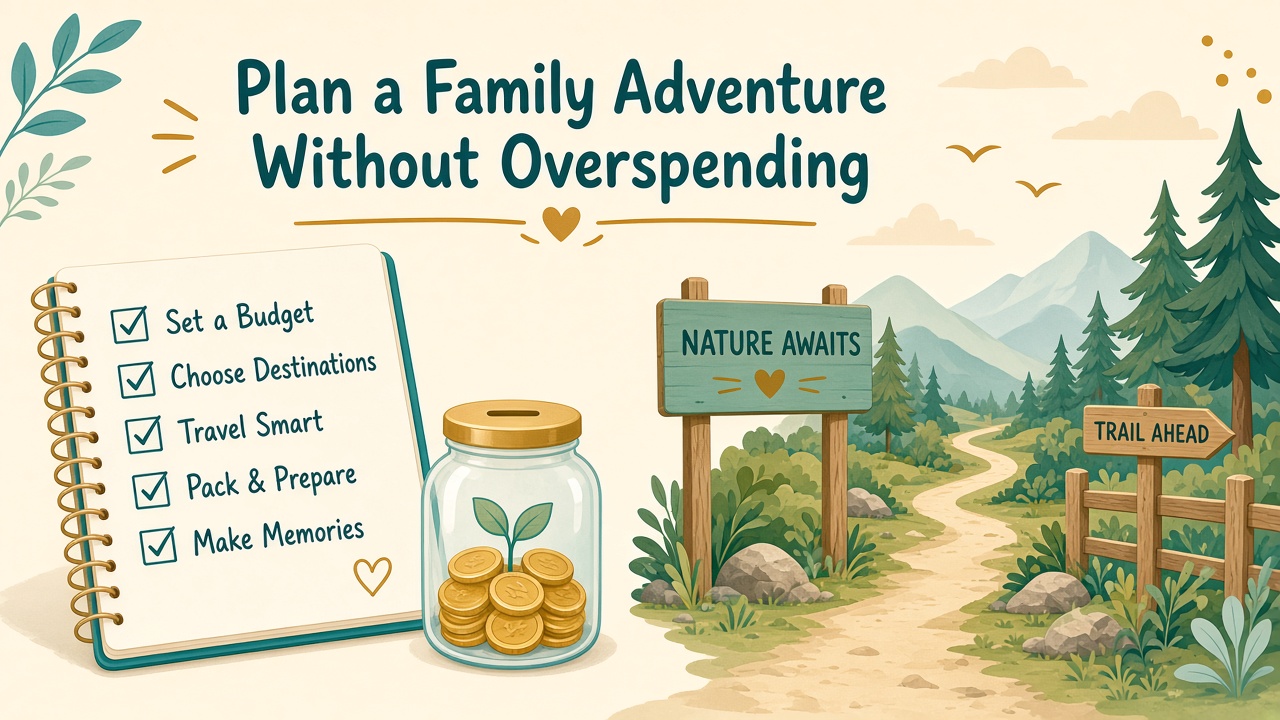
This guide walks through a calm planning path: budget, priorities, total costs, meals, transport, and a surprise buffer. It is written for real households where one person is sketching the itinerary and another is watching the numbers—and both care about a good time.
That is the Gather & Go Smart idea in practice: Mom plans the memories. Dad checks the budget. We help families do both. We also keep an Affiliate Disclosure on the site for transparency if product links appear later. This article stays educational—no prices, no “best deals,” no invented savings claims.
Start with a number before you fall in love with a plan
Excitement is wonderful. Unbounded excitement is expensive.
- Agree on a total trip envelope the family can afford without regret.
- Separate “trip money” from emergency savings so the adventure does not borrow from security.
- Decide whether the envelope includes gifts/souvenirs or whether those sit outside it.
A shared number turns later decisions into tradeoffs instead of arguments. You are not being rigid. You are being kind to future-you.
Name priorities before you name bookings
- Musts: the reason you are going (beach time, seeing grandparents, a specific event).
- Like-to-dos: nice additions if money and energy remain.
- Skips without guilt: ideas that sound fun but do not fit this trip’s purpose.
When a tempting add-on appears mid-planning, ask which tier it belongs in. Musts get funded first. Like-to-dos compete for leftover budget. Skips stay on a future list.
This protects both the memory-planner and the budget-checker. Nobody has to be the automatic “no.”
Calculate total costs—not just the headline cost
The sticker price of lodging or a ticket is rarely the full story. Sketch categories:
- Lodging
- Transportation (fuel, fares, parking, possible shuttles)
- Food (groceries, dining out, coffee/snacks)
- Activities and entry fees
- Travel gear you do not already own (only if t
Make meals a strategy, not an afterthought
Food is one of the fastest ways family trips overrun a budget—and one of the easiest places to reclaim calm.
- Plan how many restaurant meals you truly want (not how many days you will be gone).
- Grocery shop for breakfasts and a few easy lunches when lodging allows.
- Choose one or two special meal experiences and keep the rest simple.
- Pack a travel snack kit so hunger does not force premium convenience stops.
Kids often care more about predictability and favorite foods than about trendy restaurants. Save the splurge for the moments that matter to your family.
Choose transport with eyes open
Transport choices shape cost, fatigue, and flexibility.
- Compare total door-to-door time and cost, not just the main ticket.
- Factor kid energy: a cheaper option that arrives at midnight may cost you the next day in meltdowns and extra spending.
- Consider parking, car seats, and luggage real
Keep a surprise buffer on purpose
Unexpected costs are not a planning failure. They are a planning category.
- Set aside a small percentage of the trip envelope as a buffer.
- Use it for true surprises: a needed pharmacy stop, a weather pivot, an unplanned rest day activity.
- Agree that buffer money is not automatic souvenir money.
A buffer lowers tension. When something pops up, you are solving a logistics question—not starting a financial spiral in front of the kids.
A simple planning sequence you can reuse
- Set the envelope.
- Rank musts / like-to-dos / skips.
- Sketch total costs by category.
- Lock lodging and transport only after the sketch fits.
- Plan meals and activity pacing.
- Let kids vote between two already-budgeted options.
- Give a tiny souvenir budget with clear limits.
- Invite them to help pack snacks or plan a free park afternoon.
- Booking extras because “we’re already here” without checking the remaining envelope
- Underestimating snacks and small daily purcha
Remember what you are buying
You are not buying a perfect itinerary. You are buying shared experience within means you can live with afterward. A slightly smaller plan that ends in peace beats a stacked plan that ends in resentment.
Everyday ease includes the week after you get home—when the credit card statement arrives and everyone still smiles about the trip.
Soft next steps
Learn more about our family-first approach on About Us, or Contact us if you want future guides on specific trip types.
Plan the number. Name the priorities. Tally the whole cost. Feed everyone wisely. Choose transport with clear eyes. Leave a buffer. That is how families adventure without overspending—and still come home with stories worth telling.
ses - Overpacking new gear instead of using what you own
- Stacking paid activities every day with no rest (tired families spend more to cope)
- Confirm the buffer.
- Share the plan with the family in kid-friendly language.
Involve kids without handing them the wallet
Age-appropriate involvement builds buy-in.
They learn that adventures have shape. Shape is not the enemy of fun.
Watch for the sneaky overspend triggers
A few patterns catch families often:
A mid-trip three-minute check-in helps: “How is the budget feeling? How is the energy feeling?” Adjust early.
Notice what is missing: endless browsing. Browsing without a sequence creates decision fatigue and impulse upgrades.
ity for your specific family. - Build in one backup option if weather or delays are likely in your season.
Sometimes the slightly higher transport cost protects the overall trip by reducing chaos. Sometimes the simpler option is both cheaper and kinder. Run the numbers and the energy math together.
ruly needed) - Tips, souvenirs, and miscellaneous
Add rough estimates in each bucket. If the total overshoots the envelope, adjust before you emotionally commit. It is easier to resize a plan on paper than to cut joy mid-trip under stress.
If everything is a priority, nothing is.
Try a simple three-tier list:
Leave a Reply