Author: admin

  • Orlando Mobility Rental: Renting a Scooter or Wheelchair for an Orlando / Disney Trip (Without Hauling Your Own)

    Orlando days are long, parks are big, and the car is already full. If someone in your group wants a scooter or wheelchair for the trip, an Orlando mobility rental can mean one less large item to fit in the trunk or check at the airport. This is a logistics guide, not medical advice. For questions about what is right for a person, talk with their doctor.

    Think of it like packing: decide early, write it down, and handle it before the week gets busy. More habits like this live in Smart Tips.

    Step 1: Decide who needs what, and on which days

    Make a short list: who may want a ride for the long walks, and on which days (park days versus pool days). That tells you how many days to rent. Delivery from Scootaround Orlando has a 2-day minimum, so plan around that.

    Step 2: Choose where it arrives

    Skip the pickup errand. Scootaround Orlando offers free delivery to a hotel or residence within 25 miles of its Orlando location, with a minimum 2-day rental. That includes Lake Buena Vista and Kissimmee. Have your hotel name and address, and your dates, ready before you call or book.

    Step 3: Check the price before you commit

    Sample hotel/residential rates shown on Scootaround’s Orlando page (before any code):

    • Scooter: about $35/day headline, $107.00 for 3 days
    • Wheelchair: about $15/day headline, $46.00 for 3 days

    Rates are subject to change, and your final total appears at the booking form, so confirm there.

    Step 4: Check for current Scootaround offers

    Scootaround’s fall code ORLFALL10 expired October 31, 2026; check Scootaround for current offers when you book.

    Step 5: Book with our partner

    To book, call 1-888-441-7575 or use Scootaround’s online booking form (scootaround.com). Say you are booking with our partner Scootaround and mention our partner number SRN 19358, then ask about any current offers. We do not have a special link for this one. The number is how it works.

    A one-screen checklist

    • Who needs a ride, and which days?
    • Rental length (2-day minimum for delivery)
    • Hotel or residence address, within 25 miles
    • Price confirmed at the booking form
    • Checked Scootaround for current offers (ORLFALL10 expired Oct 31, 2026)
    • Partner number SRN 19358 mentioned

    See the current offers on Smart Deals.

    Mom plans the memories. Dad checks the budget. Sorting out the logistics ahead of time helps both of them, and leaves more room for the fun part.

    #ad · This is an affiliate link. We may earn a commission at no extra cost to you. See our Affiliate Disclosure.


  • Fly Lighter: Rent Baby Gear at Your Destination

    Fly Lighter: Rent Baby Gear at Your Destination

    #ad This post contains affiliate links; we may earn a commission at no extra cost to you. Read our Affiliate Disclosure.

    Packing for a trip with a baby has its own special math. One tiny person somehow needs a car seat, a stroller, a crib, and a high chair, while the grown-ups share one small bag and a hope that the toothbrushes made it in. Mom plans the memories. Dad checks the budget. And someone has to carry all of it through the airport.

    If that sounds familiar, here’s an option worth knowing about: renting baby gear at your destination instead of bringing it from home.

    What baby gear rental means

    BabyQuip is a baby gear rental marketplace. You choose the gear you need for the place and dates you’re traveling, such as a crib, a car seat, or a stroller, and a local provider (BabyQuip calls them Quality Providers) gets it to you. BabyQuip sums up the idea this way: “No lugging bulky gear or paying hefty airline baggage fees – just pack light and go.”

    Skip the haul (and the bag fees)

    Checked-bag fees add up, and so does the wrestling match at the check-in counter. BabyQuip points out that renting “eliminates the need to pack and haul bulky baby equipment through the airport or take up valuable trunk space.” That’s handy on road trips, too.

    Sleep is a big part of it. BabyQuip says full-size cribs are its most rented item, and puts the reason simply: “When a baby doesn’t sleep well on vacation, no one does!”

    Delivered to your destination, or even the airport

    Gear can be delivered to where you’re staying. BabyQuip’s How It Works page also says: “Have a car seat, stroller, or other baby gear delivered to you right at the airport.” That means you could step off the plane without a car seat on your back.

    One thing to check first: the same page notes that “some Quality Providers charge an additional fee for airport deliveries.” Look at the provider’s fees before you book.

    Browse baby gear for your destination on BabyQuip

    Cleaned, inspected, and insured

    “Is rented baby gear clean?” is a fair question. BabyQuip’s cleaning standards say its rental items “are inspected and deep cleaned after every pickup and then inspected and sanitized again before the next delivery.” Its Trust and Safety page says all equipment listed on the site “is monitored for safety recalls and expirations.” BabyQuip also says “every rental may be protected with up to $1,000,000 USD in liability insurance.”

    As with any gear, give it a once-over when it arrives, and follow the usual car seat installation steps before the first drive.

    Staying longer? The discount is automatic

    Planning a long visit with the grandparents or an extended holiday? According to BabyQuip’s FAQ, discounts are applied automatically for longer rentals. No code needed:

    • 1–8 days: standard daily rate
    • 9–16 days: 10% off
    • 17–24 days: 20% off
    • 25+ days: 30% off

    Important: BabyQuip says long-term rental discounts do not apply to delivery fees.

    In plain words: a two-week trip lands in the 10% tier, a visit of about two and a half to three and a half weeks lands in the 20% tier, and a month-long stay lands in the 30% tier. Also good to know: BabyQuip says that, as a general rule, it has a 3-day minimum rental period.

    $20 off when you sign up for BabyQuip emails

    Sign up for BabyQuip emails for $20 off a rental of $100 or more. BabyQuip presents this as a first-rental offer, and its sign-up page mentions email and SMS. The $100 minimum is based on the “item total.”

    A few details from the offer terms: it’s one discount per customer, it can’t be combined with other offers or applied to reservations you’ve already scheduled, and it doesn’t apply to consumables. It can be used with the long-rental discount, but the long-rental discount is applied first.

    Check BabyQuip rentals for your trip

    Dad’s budget check before you book

    Savings are nice. The full picture is nicer. Before you book, look at:

    • Service fee: BabyQuip’s FAQ says it charges “a service fee between 6% and 9%.”
    • Delivery fees: These are set by each Quality Provider, and the long-rental discount doesn’t cover them.
    • Airport delivery: Some providers charge extra for it.
    • Your side of the math: Compare your rental total with what it would cost your family to bring your own gear on your airline, plus the hassle factor.

    Reader tip: If you’re staying in a Vrbo, BabyQuip says Vrbo guests get 10% off their gear rental when booking through the offer link in their Vrbo dashboard or email. That discount only works through Vrbo’s own link, and it can’t be combined with other offers.

    The Smart Tips takeaway

    Traveling with a baby is never light, but it can be lighter. Make a list of the big, bulky items, check what’s available where you’re headed, read the fees, and decide what’s worth hauling and what’s worth renting. Then pack the snacks. Always pack the snacks.

    See what BabyQuip offers where you’re headed

  • The Family Trip Planning Committee: Mom, Dad & Everyone Else

    The Family Trip Planning Committee: Mom, Dad & Everyone Else

    Every family trip has an unofficial committee. Nobody elects it. Nobody prints nameplates. Yet somehow, by the time the suitcase hits the bed, roles have been assigned—usually by history, personality, and whoever last said, “Don’t worry, I’ll handle it.”

    This is a warm, slightly funny guide to those roles, and how to make the committee work with you instead of turning planning into a second job for one parent. At Gather & Go Smart, our guiding line says it plainly: Mom plans the memories. Dad checks the budget. We help families do both. Your household might swap those jobs, share them, or invent new ones. The point is teamwork with a sense of humor.

    We keep an Affiliate Disclosure for any future product links. No shopping list here—just people dynamics and practical ways to divide the work.

    Welcome to the committee (attendance is mandatory)

    Meet the common cast. Your family may have different titles. Feel free to rename with markers and scrap paper—kids love official-sounding jobs.

    Chair of Memories (often Mom, not always)

    This person collects the “wouldn’t it be amazi

    Secretary of the Budget (often Dad, not always)

    This person asks the lovingly awkward questions: “What does that total with parking?” and “Do we already own a cooler?”

    Superpower: protecting the trip from regret. Side effect: can sound like a human spreadsheet if everyone is tired. Support tip: invite them in early with a shared envelope number, not at the end as a veto board.

    Director of Snacks & Morale

    Sometimes a parent, sometimes a responsible older kid. They know that a well-timed granola bar prevents diplomacy crises.

    Superpower: mood forecasting. Side effect: may pack enough snacks to supply a small scout troop. Support tip: set a snack budget and a bag size limit. Creativity thrives inside a tote.

    Minister of Entertainment

    Ambassador of “But I Don’t Wanna”

    Every committee needs an honest critic. This may be a toddler, a teen, or a parent who has already worked a long week.

    Superpower: reality checks on energy and fairness. Side effect: can stall planning if every idea gets a veto. Support tip: offer two budgeted choices instead of open-ended debates.

    Junior Logistics Officers (the kids)

    How healthy committees actually operate

    Lighthearted titles only help if the process is kind. Try these operating rules:

    1. One shared note. Ideas, costs, packing list, and confirmation numbers live in one place.
    2. Two decision windows. Big de

      A sample “committee meeting” that takes fifteen minutes

      Sunday evening. Devices down for a quarter hour.

      • Chair of Memories proposes two trip concepts that already fit a rough budget.
      • Secretary of the Budget confirms the envelope and flags one cost risk.
      • Kids vote between the two concepts (or between two activities inside one trip).
      • Director of Snacks names meal approach: mostly homemade, one restaurant treat.
      • Minister of Entertainment claims download night two days before departure.
      • Everyone gets a tiny action item with a due date.

      Adjourn. Resume being a normal family that argues about whose turn it is to unload the dishwasher.

      When roles get lopsided

      If one person is doing vision, research, packing, scheduling, and emotional labor, that is not a committee—that is a solo founder with unpaid interns.

      Rebalance without blame:

      Humor helps, but so does specificity. “Help more” is vague. “Can you call the hotel and confirm the crib?” is doable.

      Relatable truths (said with love)

      • Someone will forget the charger. The committee survives.
      • The itinerary will change. That is not failure; that is parenting with GPS.
      • The budget will meet a surprise. That is why buffers exist.
      • Photos will miss the “perfect” moment and somehow capture the real one: sticky hands, crooked hats, big smiles.

      Families who laugh at the process usually enjoy the trip more. Perfection is not on the agenda.

      Soft next steps

      Curious how Gather & Go Smart thinks about family life on the road and at home? Visit About Us. Have a committee story or a topic request? Contact us—we read with a smile.

      The Family Trip Planning Committee does not need formal bylaws. It needs clear roles, shared numbers, room for jokes, and a reminder that the goal is not a flawless plan. The goal is a family that arrives together—memories sketched, budget respected, snacks secured, and at least one playlist everyone can tolerate.

      • Swap lead roles for the next trip.
      • Split by category: one adult owns lodging research; the other owns car readiness and route.
      • Use a timer: twenty minutes of shared planning beats three nights of one-person spiral.
      • Say the quiet part kindly: “I need co-pilots, not an audience.”
      cisions early; small decisions closer to the trip. Avoid reopening settled choices daily.
    3. Tradeoffs out loud. “If we do the paid museum, we pack picnic lunches.” Transparent swaps beat silent scorekeeping.
    4. No surprise vetoes. Budget concerns belong in planning meetings, not in the hotel lobby.
    5. Celebrate the plan. When the outline is set, acknowledge the team. Planning is unpaid labor. Notice it.

    Kids are not just cargo. They can own water bottles, pack a small activity pouch, and help check the house lights before leaving.

    Superpower: buy-in through contribution. Side effect: packing three stuffed animals and one sock. Support tip: one special item each, plus jobs with clear finish lines.

    Playlist curator. Tablet download manager. Keeper of the card game that somehow still has most of its cards.

    Superpower: reducing “Are we there yet?” frequency by at least 12%. Side effect: strong opinions about whose song is next. Support tip: rotate DJ rights by hour or by state line.

    ng if…” ideas. They notice the festival, the cousin’s birthday weekend, the hiking trail that looks perfect for fall photos.

    Superpower: vision and emotional weather-reading. Side effect: seventeen browser tabs and a Pinterest board named “Someday.” Support tip: give them a deadline to narrow musts versus nice-to-dos so vision does not become overwhelm.

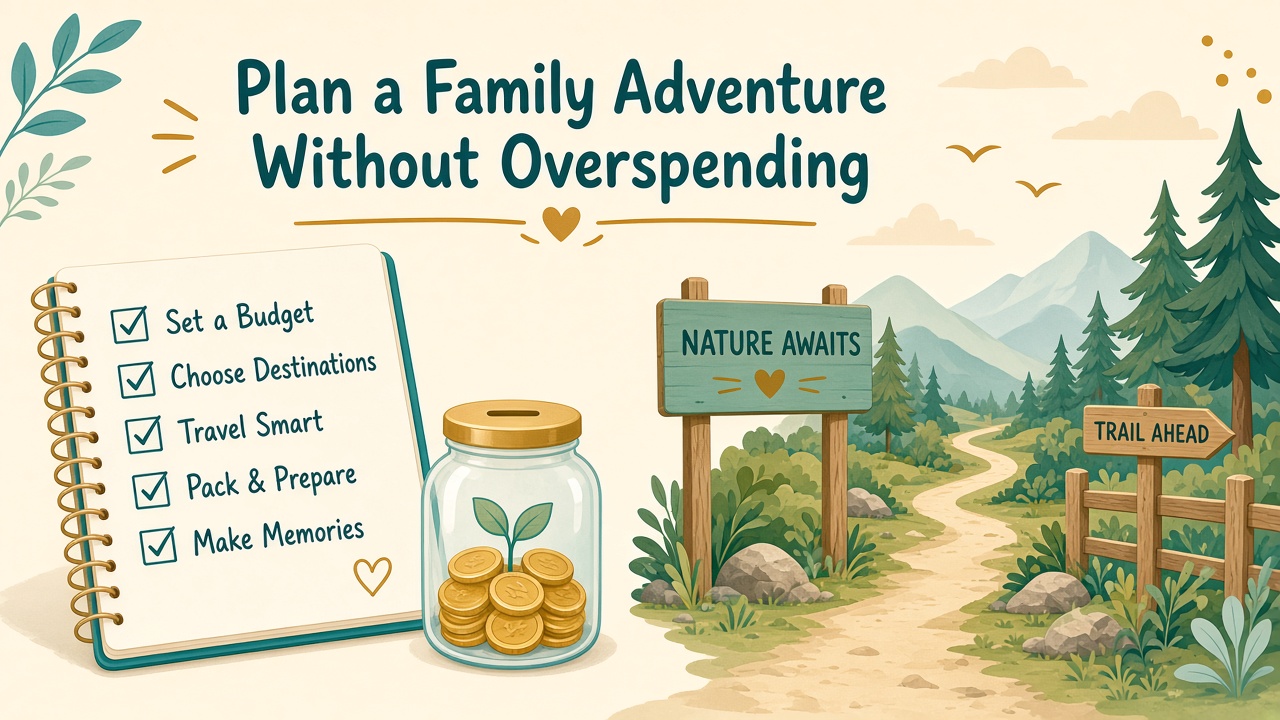
  • How to Plan a Family Adventure Without Overspending

    How to Plan a Family Adventure Without Overspending

    Family adventures should stretch your sense of wonder—not silently stretch your credit card. The good news: memorable trips are less about spending more and more about deciding earlier.

    This guide walks through a calm planning path: budget, priorities, total costs, meals, transport, and a surprise buffer. It is written for real households where one person is sketching the itinerary and another is watching the numbers—and both care about a good time.

    That is the Gather & Go Smart idea in practice: Mom plans the memories. Dad checks the budget. We help families do both. We also keep an Affiliate Disclosure on the site for transparency if product links appear later. This article stays educational—no prices, no “best deals,” no invented savings claims.

    Start with a number before you fall in love with a plan

    Excitement is wonderful. Unbounded excitement is expensive.

    • Agree on a total trip envelope the family can afford without regret.
    • Separate “trip money” from emergency savings so the adventure does not borrow from security.
    • Decide whether the envelope includes gifts/souvenirs or whether those sit outside it.

    A shared number turns later decisions into tradeoffs instead of arguments. You are not being rigid. You are being kind to future-you.

    Name priorities before you name bookings

    1. Musts: the reason you are going (beach time, seeing grandparents, a specific event).
    2. Like-to-dos: nice additions if money and energy remain.
    3. Skips without guilt: ideas that sound fun but do not fit this trip’s purpose.

    When a tempting add-on appears mid-planning, ask which tier it belongs in. Musts get funded first. Like-to-dos compete for leftover budget. Skips stay on a future list.

    This protects both the memory-planner and the budget-checker. Nobody has to be the automatic “no.”

    Calculate total costs—not just the headline cost

    The sticker price of lodging or a ticket is rarely the full story. Sketch categories:

    • Lodging
    • Transportation (fuel, fares, parking, possible shuttles)
    • Food (groceries, dining out, coffee/snacks)
    • Activities and entry fees
    • Travel gear you do not already own (only if t

      Make meals a strategy, not an afterthought

      Food is one of the fastest ways family trips overrun a budget—and one of the easiest places to reclaim calm.

      • Plan how many restaurant meals you truly want (not how many days you will be gone).
      • Grocery shop for breakfasts and a few easy lunches when lodging allows.
      • Choose one or two special meal experiences and keep the rest simple.
      • Pack a travel snack kit so hunger does not force premium convenience stops.

      Kids often care more about predictability and favorite foods than about trendy restaurants. Save the splurge for the moments that matter to your family.

      Choose transport with eyes open

      Transport choices shape cost, fatigue, and flexibility.

      • Compare total door-to-door time and cost, not just the main ticket.
      • Factor kid energy: a cheaper option that arrives at midnight may cost you the next day in meltdowns and extra spending.
      • Consider parking, car seats, and luggage real

        Keep a surprise buffer on purpose

        Unexpected costs are not a planning failure. They are a planning category.

        • Set aside a small percentage of the trip envelope as a buffer.
        • Use it for true surprises: a needed pharmacy stop, a weather pivot, an unplanned rest day activity.
        • Agree that buffer money is not automatic souvenir money.

        A buffer lowers tension. When something pops up, you are solving a logistics question—not starting a financial spiral in front of the kids.

        A simple planning sequence you can reuse

        1. Set the envelope.
        2. Rank musts / like-to-dos / skips.
        3. Sketch total costs by category.
        4. Lock lodging and transport only after the sketch fits.
        5. Plan meals and activity pacing.
        6. Involve kids without handing them the wallet

          Age-appropriate involvement builds buy-in.

          • Let kids vote between two already-budgeted options.
          • Give a tiny souvenir budget with clear limits.
          • Invite them to help pack snacks or plan a free park afternoon.

          They learn that adventures have shape. Shape is not the enemy of fun.

          Watch for the sneaky overspend triggers

          A few patterns catch families often:

          • Booking extras because “we’re already here” without checking the remaining envelope
          • Underestimating snacks and small daily purcha

            Remember what you are buying

            You are not buying a perfect itinerary. You are buying shared experience within means you can live with afterward. A slightly smaller plan that ends in peace beats a stacked plan that ends in resentment.

            Everyday ease includes the week after you get home—when the credit card statement arrives and everyone still smiles about the trip.

            Soft next steps

            Learn more about our family-first approach on About Us, or Contact us if you want future guides on specific trip types.

            Plan the number. Name the priorities. Tally the whole cost. Feed everyone wisely. Choose transport with clear eyes. Leave a buffer. That is how families adventure without overspending—and still come home with stories worth telling.

            ses
          • Overpacking new gear instead of using what you own
          • Stacking paid activities every day with no rest (tired families spend more to cope)

          A mid-trip three-minute check-in helps: “How is the budget feeling? How is the energy feeling?” Adjust early.

        7. Confirm the buffer.
        8. Share the plan with the family in kid-friendly language.

        Notice what is missing: endless browsing. Browsing without a sequence creates decision fatigue and impulse upgrades.

        ity for your specific family.
      • Build in one backup option if weather or delays are likely in your season.

      Sometimes the slightly higher transport cost protects the overall trip by reducing chaos. Sometimes the simpler option is both cheaper and kinder. Run the numbers and the energy math together.

      ruly needed)
    • Tips, souvenirs, and miscellaneous

    Add rough estimates in each bucket. If the total overshoots the envelope, adjust before you emotionally commit. It is easier to resize a plan on paper than to cut joy mid-trip under stress.

    If everything is a priority, nothing is.

    Try a simple three-tier list:

  • Smart Travel Finds: What Makes an Item Worth Packing?

    Smart Travel Finds: What Makes an Item Worth Packing?

    Travel aisles and social feeds are full of “must-have” gadgets. Families do not need more must-haves. They need a clearer way to decide what actually earns suitcase space.

    This article is not a product roundup. It is a decision framework you can use for any trip—weekend drive, summer visit to grandparents, or a longer getaway. At Gather & Go Smart, we care about everyday ease and family adventures that respect both memories and budgets. The theme is simple: Does it earn its place?

    If we share product links in future articles, we maintain an Affiliate Disclosure so readers understand how those relationships work. Here, we stay focused on thinking tools—not endorsements, not “we tested this,” and not invented rankings.

    Why packing decisions feel harder than they should

    1. Usefulness: Does it solve a real problem on this trip?

    Useful means specific, not vague.

    • Ask: What exact problem does this solve for our family on these dates?
    • Prefer items that support multiple people or multiple moments of the day.
    • Be wary of solutions looking for problems (“It might be cute to have…”).

    A compact first-aid pouch that you will actually open is useful. A specialty tool you have never needed at home rarely becomes essential on vacation.

    Write the problem in one sentence. If you cannot, the item may be aspirational clutter.

    2. Durability: Will it survive real family use?

    Kids drop things. Suitcases get tossed. Cars get hot.

    • Favor sturdy construction over fragile novelty.
    • Consider cleaning: can spit-up, sand, or snac

      3. Space and weight: What does it cost in the bag?

      Every item has a footprint.

      • Measure mentally: Does this displace clothes, snacks, or a comfort item a child relies on?
      • Soft-sided and nestable items usually travel kinder than rigid one-purpose gadgets.
      • Shared family items often beat near-duplicates for each person.

      If an item only works when packed carefully in bubble wrap and good luck, it may not belong on a family trip.

      4. Frequency: How often will we use it?

      This question quietly eliminates half of “just in case” packing.

      • Daily or near-daily use: strong candidate.
      • Once on the trip: maybe, if the payoff is hig

        5. Already own similar: Are we packing a twin?

        Before adding anything—especially before buying anything—scan what you already have.

        • Can a scarf double as a nursing cover, sun shield, or plane blanket?
        • Can a regular water bottle cover hydration without a new bottle shape?
        • Can the tablet you already own handle the entertainment role without a second screen?

        Families often own “good enough” versions of travel-marketed items. Using what you have protects the budget and shrinks the bag.

        A quick scoring habit

        Give each candidate a rough yes/no on the five factors:

        1. Useful for this trip
        2. Durable enough
        3. Reasonable space cost
        4. Likely frequent use
        5. Not a duplicate

        Special categories that deserve their own rules

        Medications and documents: These earn their place by necessity, not frequency. Pack them first.

        Kid comfort items: A small stuffed friend or blanket may score low on “usefulness” in adult logic and still be essential for sleep. Include one intentional comfort item per child rather than a suitcase of backups.

        Weather layers: One versatile layer often beats three single-purpose pieces.

        Entertainment: Prefer a short rotation over a full toy drawer. Novelty from rotation beats volume.

        How to talk about packing as a family

        Make “Does it earn its place?” a shared phrase.

        • Let kids nominate one special item and explain why it earns a spot.
        • Let the budget-minded adult ask the space and duplicate questions without becoming the villain.
        • After the trip: a five-minute review

          The best packing filter improves over time.

          • What did we use constantly?
          • What never left the bag?
          • What do we wish we had—and was that a real need or a one-time annoyance?

          Keep a running note on your phone titled “Next trip packing truths.” Future-you will be grateful.

          Soft next steps

          If you want more practical family travel thinking—without the hype—visit About Us or send ideas through Contact.

          Smart travel finds are less about discovering a magic object and more about asking better questions. Usefulness. Durability. Space. Frequency. Duplicates. When an item can answer those honestly, it has earned its place.

        • Let the memory-minded adult protect the comfort and connection items that make the trip feel like your family.

        That teamwork is the heart of Gather & Go Smart: planning memories and checking the budget can happen in the same conversation.

        Four or five yeses: pack it. Two or three: maybe if someone feels strongly and space remains. Zero or one: leave it.

        You do not need a spreadsheet. A thirty-second pause at the suitcase is enough.

        h and the size is small.
      • “Probably never, but I’ll feel safer”: usually leave it—unless it is a true safety essential (critical medication, required documents).

      Frequency is where wishful packing meets reality. Be honest about your itinerary. A beach toy earns its place on a beach week; it does not need to ride along to a city museum weekend.

      k dust be wiped off quickly?
    • Think about repairability or replaceability within your budget if something fails mid-trip.

    Durability is not about buying the most expensive option. It is about matching the item’s toughness to how your family actually travels.

    Parents pack for many jobs at once: comfort, safety, entertainment, weather, and “just in case.” Without a filter, bags swell and stress rises. A good filter protects space, money, and patience.

    Use five questions before anything new joins the bag—or before something old gets packed again by habit.

  • 10 Meaningful Family Activities That Don’t Cost Much

    10 Meaningful Family Activities That Don’t Cost Much

    Meaningful does not have to mean expensive. Some of the moments families remember longest happen on a blanket in the backyard, on a library rug, or on a short walk where nobody checked their phone for twenty minutes.

    If money feels tight—or you simply want connection without another ticketed outing—this list is for you. These ideas lean on time, attention, and a little creativity. They fit the Gather & Go Smart spirit: everyday ease and family adventures that respect both hearts and budgets.

    We keep an Affiliate Disclosure on our site for transparency if product links appear in the future. Nothing here is a product pitch. These are activity ideas you can adapt with what you already have.

    1. Backyard or park picnic

    Pack sandwiches, fruit, and a drink. Sit outside. That is the whole plan.

    • Let kids help choose the menu and pack the bag.
    • Bring a simple game: cards, catch, or “I spy.”
    • Leave phones in a bag for a set stretch of time.

    A picnic turns an ordinary meal into a mini adventure without restaurant prices.

    2. Nature walk with a tiny mission

    A short trail or neighborhood greenway becomes

    You get movement, fresh air, and conversation that beats “How was school?” on a loop.

    3. Library adventure afternoon

    Libraries are still one of the best free family resources.

    • Each person picks one book, magazine, or audiobook.
    • Attend a free story time or community program if timing works.
    • Create a family reading challenge for the week.

    Curiosity is the activity. The building is just the launchpad.

    4. Classic game night (no new purchases required)

    Dust off games you already own—or invent house rules for cards.

    • Rotate who chooses the first game.
    • Keep rounds short so younger kids stay included.
    • Add a silly trophy (a wooden spoon labeled “Champion of Tonight”).

    The point is shared laughter, not tournament s

    • Try a new playground your family has not visited lately.
    • Pack a ball or frisbee you already own.
    • End with a free splash pad in season, or a shaded snack stop.

    Exploring your own town keeps “adventure” accessible on busy weeks.

    6. Kitchen “restaurant night”

    Turn dinner into an experience without takeout.

    • Kids design a paper menu and take “orders.”
    • Assign simple jobs: napkin folding, playlist DJ, dessert plating.
    • Eat by candlelight (battery candles for safety with littles).

    Same groceries. Different energy. Big memory potential.

    7. Living room campout

    When travel is not in the budget, bring the camp vibe indoors.

    You do not need gear. You need willingness to rearrange the furniture for one night.

    eriousness.

    5. Local park circuit

    Treat nearby parks like destinations.

    more engaging with a purpose.

    • Spot five different leaves, three bird sounds, or one interesting cloud shape.
    • Take turns being “navigator” with a simple map sketch.
    • Collect nothing living—photos and observations are enough.
  • Family Road Trip Planning: 7 Things to Do Before You Hit the Road

    Family Road Trip Planning: 7 Things to Do Before You Hit the Road

    Family road trips can be the best kind of adventure: shared playlists, unexpected roadside stops, and that first stretch of quiet highway when everyone finally settles in. They can also turn sharp if the only plan is “we’ll figure it out.”

    You do not need a binder full of printouts. You need a handful of decisions made before the wheels roll. Below are seven things that consistently make family road trips smoother—without sucking the fun out of the journey.

    At Gather & Go Smart, our guiding line is simple: Mom plans the memories. Dad checks the budget. We help families do both. These steps support that balance. And if product recommendations ever appear on our site later, we maintain an Affiliate Disclosure so readers know how we handle links. This guide stays educational and practical.

    1. Choose a route that matches your family’s real energy

    The fastest route is not always the kindest route with kids in the back seat.

    • Map primary drive time and a backup path in case of traffic or weather.
    • Note stretches without services so you are not surprised by empty exits.
    • Decide whether scenic detours are “musts” or

      2. Plan breaks like they are part of the itinerary

      Breaks are not interruptions. They are how you finish the day still liking each other.

      • Aim for stretch stops on a rhythm that fits your kids’ ages (younger travelers usually need more frequent resets).
      • Pick a mix: rest area bathrooms, a park for running, a short scenic overlook.
      • Build buffer time so a longer stop does not cascade into late arrival stress.
      • Agree in advance who can call an unscheduled break when someone is carsick or overwhelmed.

      When breaks are planned, they feel intentional instead of like “another delay.”

      3. Set a snack and meal strategy

      Food is logistics and mood management.

      • Pack a core snack kit that covers sweet, salty, and something with protein.
      • Decide which meals are homemade or cooler-based versus which are planned stop buys.
      • Keep expectations realistic: road food is rar

        4. Prepare entertainment without packing the entire playroom

        Bored kids invent conflict. Overstimulated kids invent different conflict. Aim for a small rotation.

        • A few favorite books, sticker pads, or travel games.
        • Downloaded shows or audiobooks for low-signal stretches.
        • A shared family playlist with each person’s picks.
        • Quiet options for evening drive segments when everyone is tired.

        Rotate items rather than dumping everything into the car at once. Novelty lasts longer that way.

        5. Pack with “reachability” in mind

        Road trip packing is different from suitcase packing for a hotel.

        • Day bag in the cabin: wipes, tissues, meds, chargers, snacks, a spare outfit for littles.
        • Trunk organization so you can find jackets an

          6. Do a car and safety readiness pass

          This is the unglamorous step that prevents big problems.

          • Check tire pressure, lights, wiper fluid, and that you know where the spare/jack info lives.
          • Confirm child seats are installed correctly and buckles are not twisted under winter coats.
          • Load roadside basics: water, flashlight, phone mount or stand, and any tools you already own and know how to use.
          • Share location with a trusted person and leave an approximate arrival window.

          You are not trying to become a mechanic overnight. You are reducing avoidable surprises.

          7. Build flexibility into the plan on purpose

          Rigid schedules crack under real family travel.

          • Name one “must do” and two “nice to dos” for each day.
          • Leave open space for a spontaneous stop that looks great in person.
          • Decide in advance how you will handle weather

            A sample pre-trip timeline

            One week out: route, lodging, rough meal approach, entertainment downloads. Two days out: packing lists, laundry, cooler plan, car check. Morning of: five-minute essentials check (documents, meds, chargers, snacks, weather layers), bathroom stop, and go.

            Keep roles light. One person can own navigation and timing; another can own snacks and comfort; kids can own their small activity pouch. Shared ownership makes the trip feel like a family project, not one parent’s unpaid second job.

            Budget note without the stress spiral

            Road trips often look cheaper than flights until extras stack up: snacks, spontaneous attractions, overnight stays, parking. Before you leave, set a simple trip envelope—fuel, food, lodging, fun money, and a small surprise buffer. Track as you go without turning every ice cream stop into a finance meeting.

            Soft next steps

            For more family-friendly planning ideas, explore About Us or reach out through Contact. Everyday ease starts before the first mile marker.

            Hit the road with a route, a break rhythm, snacks, entertainment, reachable packing, a ready car, and room to adapt. That is family road trip planning that respects both memories and the budget.

          • Agree on a calm reset phrase: something like “new plan, same trip” when the itinerary shifts.

          Flexibility is not the absence of planning. It is planning for the fact that kids, traffic, and weather do not read your spreadsheet.

          d shoes without unpacking half the car.
        • One “overnight essentials” tote if you are hotel-hopping—pajamas, toothbrushes, chargers within easy grab.
        • A trash system (bag + wipes) that actually gets emptied at stops.

        If an item is needed every two hours, it should not live under three suitcases.

        ely perfect, and that is okay.
      • Hydrate on purpose. Thirsty kids complain; overly full water bottles create more bathroom stops—find your family’s middle ground.

      A light meal plan protects the trip budget and reduces the “we’re starving, pull over anywhere” tax.

      “if we have time.”
    • Share the plan with everyone old enough to care—kids handle long drives better when they know what “halfway” looks like.

    A clear route reduces last-minute arguing and helps the budget-minded parent estimate fuel and tolls early.

  • The 5-Minute Family Packing Check Before You Leave

    The 5-Minute Family Packing Check Before You Leave

    You know the feeling. Bags are in the car. Kids are buckled. Someone already asked if you locked the front door. Then—halfway down the street—you remember the charging cable, the prescription refill, or the weather app you never checked.

    That scramble is normal. Families juggle a lot. The fix is not a perfect packing system. It is a short, repeatable check you can run in about five minutes before you leave.

    This checklist is built for everyday trips and weekend getaways. Use it as a last pass after the big packing is done. Print it, save it on your phone, or turn it into a shared family note. At Gather & Go Smart, we believe mom plans the m

    Why a five-minute check works

    Long packing lists are useful days before a trip. At the door, you need something shorter. Five minutes is long enough to catch the high-cost mistakes (forgotten medication, missing IDs) and short enough that kids will still cooperate.

    Treat it like a closing routine for the house: same order every time, same categories, same “who checks what.” Consistency beats inventing a new system on every trip.

    1. Travel documents and IDs

    Start here. Everything else is replaceable; missing documents can stop a trip cold.

    • Confirm tickets, reservations, and confirmation emails are accessible offline or printed if you prefer paper.
    • Check driver’s licenses, student IDs, or membership cards you know you will need.
    • Pack any forms for camps, hotels, or medical

      2. Medications and health basics

      Medications are easy to leave on the bathroom counter when you are rushing.

      • Daily prescriptions for each family member, plus a small buffer if the trip runs long.
      • Over-the-counter basics your family actually uses (fever reducer, allergy relief, motion comfort—whatever is normal for your crew).
      • Inhalers, epi-pens, or other must-haves if anyone relies on them.
      • A short written list of dosages and allergies for caregivers or grandparents helping on the trip.

      Keep meds in a clear pouch near the front of a

      • Phone chargers for each device you rely on.
      • One shared cable kit if you travel light (USB-C / Lightning as needed for your household).
      • Power bank if you expect long travel days.
      • Headphones or earbuds for kids who use them for quiet time.

      Do a quick plug-in test the night before when possible. Finding a broken cord in the driveway is avoidable.

      4. Snacks and water

      Hunger flips moods faster than traffic.

      • Water bottles filled and ready.
      • Simple snacks that travel well and match your

        5. Weather and comfort needs

        Open the forecast one more time before you lock the door.

        • Light jacket or rain layer if skies look iffy.
        • Extra socks or a change of clothes for littles who spill, splash, or overheat.
        • Sunscreen, hats, or cold-weather gloves depending on the season.
        • Comfort items that prevent meltdowns: a favorite stuffed friend, blanket, or quiet toy.

        Weather surprises are normal. A thin layer and a spare outfit cost little space and save a lot of friction.

        6. Last-minute essentials people forget

        This is the catch-all that usually saves the day.

          A simple run-through routine

          Try this order so nobody is hunting through every bag twice:

          1. Documents
          2. Meds
          3. Power
          4. Snacks and water
          5. Weather layers
          6. House and keys

          Two adults can split the list: one handles people items, one handles house and car. Kids can “own” water bottles and a small snack bag. Participation builds buy-in and teaches responsibility without a lecture.

          Keep it kind

          If something is missing, fix it without turning the driveway into a courtroom. The goal is a smoother goodbye, not a perfect score. Families who travel often still forget things. What matters is catching the high-impact items early enough to turn around without derailing the day.

          Soft next steps

          Want more practical family planning ideas? Visit our About page to learn how Gather & Go Smart approaches everyday ease and family adventures, or Contact us if you have a topic you want us to cover next.

          Five minutes. Six categories. One calmer exit. That is a packing check worth keeping.

        • Keys, wallet, and house lock confirmation.
        • Sunglasses, reading glasses, or contact supplies.
        • Pet needs if animals are coming or being boarded (food, leash, care instructions).
        • House basics: trash out, fridge check for leftovers that will spoil, lights/thermostat set.
        • A quick photo of the packed car trunk or bag lineup—oddly helpful when you wonder later, “Did we bring X?”
        family’s preferences.
      • Something protein-friendly for longer drives so you are not forced into every rest stop.
      • A trash bag or wipe pack for crumb control.

      You do not need a gourmet cooler for a five-minute check. You need enough fuel to keep everyone human until the next planned stop.

      bag so they are not buried under clothes.

      3. Chargers, cords, and power

      Dead phones turn navigation, photos, and “where are you?” texts into stress.

      offices in one folder or phone album.
    • If you are crossing a border or flying, verify passports and any required consent letters early—not at the curb.

    Assign one adult as the “document lead” for that trip. It reduces the “I thought you had it” loop.

    emories and dad checks the budget—and a simple exit check helps everyone leave calmer.

    If you later explore product ideas for travel organization, remember we keep an Affiliate Disclosure on the site so any future links stay transparent. This article stays educational: what to check, not what to buy.